Friday, December 25, 2020

"...More Powerful, More Cruel."

Some years back, a High School coach was overheard talking to her team about the upcoming match. One of her players, a smaller underclassman who did not see much playing time through most of the season but continued to be positive throughout, listened intently as the Coach finalized the game plan. At the end of the pre game chat, the Coach looked at this younger player and told her she would be going in to serve for one of the middles. The player was so excited. Her Parents and friends in the stands would finally get to see her play!

The game started but when it was time for her to serve, the middle walked behind the service line and fired one into the net.

The player was perplexed and looked at the Coach who was deep in thought about the match.

Moments later, the middle went back to serve again. This time, thinking the Coach had just forgotten, stood up as if to sub into the match.

The Coach didn’t notice.

Finally with the game in the balance, the middle went back to serve again. Summoning up her courage, she asked the Coach if she wanted her to go in? The Coach looked down at the bench and motioned for the younger player to sit back down.

What doesn’t matter is who won or lost that game or the ones that came after. This player was crushed. The Coach had unwittingly or not, eviscerated this players confidence in both herself AND her Coach with one thoughtless gesture.


If the Coach was asked about her reversal of this young player’s fortune, she might deflect to “the player didn’t understand what I meant,” or maybe, “I just forgot,” or even still, “The match was too close to take a chance.”

Zeynap Tufekci is a Turkish born Sociologist and writer who works with the University of North Carolina. Her writings and observations on the early days of the Corona Virus eliminating the politics, non science and public hysteria led the New York Times to publish an article entitled, “How Zeynep Tufekci Keeps Getting the Big Things Right!” Her weekly blog is widely read and covers many different topics.

In one of her blogs from early December, she talked about her early life in Turkey. “I grew up in the aftermath of the coup in Turkey, the one in 1980, following a generation that had a lot of grim experience with some of the worst conditions of repression—jails, detention, torture. They were not just older but often seemed impossibly distant from those of us who had not lived through any of the horrors they would sometimes hint at but rarely discuss openly but not really talk about. Their words often sounded like puzzles we could not make sense of, and their advice was cryptic.”

“I remember a discussion about how one should never hope, but one also should never lose hope. I later learned that one of their defining experiences of the preceding generation was the detention period in the police headquarters. It was the worst phase—where the torture happened, and where people tried to endure and survive until they got transferred to the courts. They didn’t get justice in the courts, but they got relief from the worst. They’d see a judge and be sent to prison, which was certainly not a holiday but at least offered the relative safety of a ward with fellow prisoners.”

Then Tufekci talked about the loss of hope. “Apparently, one of the ways the torturers would try to break people during detention was to plant false hope—tomorrow you’ll be transferred, they’d promise—which, of course, didn’t happen, crushing people’s endurance in ways the horrific physical torture did not. The mind-games were more powerful, more cruel.”

It may seem like a tectonic stretch to compare the horrors of a political struggle with not being able to serve in a volleyball match, but the false hope argument is a way, intentional or not, of crushing people’s endurance.


For this player, it could be the difference between playing on in a sport she loves or quitting, being part of a positive culture or pulling away from the team, being a player who would do anything for this coach or the player who distrusts and dismisses everything they say going forward.

It's easy to get lost in the minutiae of a match and as coaches, we have all had this happen to us. But giving a player hope only to yank it away is cruelty.

Maybe this happened to you in your youth sport or school career? Imagine you are given your dream job coaching at a high level D1 job only to have the AD call you the next day and rescind the offer. How crushed would you feel.

What a Coach says to their players may be just lip service for the coach, but it can be monumental for the players. What is said must be clear, concise and most of all, UNDERSTOOD!

We can all do better at this in our everyday encounters with people, but our athletes, who we pledge to take care of, treat well and respectfully and most of all train to flourish as players AND people deserve even more of our attention to detail.

Friday, October 9, 2020

The Stopover...

The 2020 (now 2021) Olympic mantra has been, “Path to the Podium.” Olympic hopefuls from all over the U.S. and from different sports have used this to show their journeys through promotional videos and interviews.

There is a question that begs to be answered though. Knowing where these Olympic athletes are now, would it have helped if they had known what was needed beforehand to book their trip to Tokyo years later?

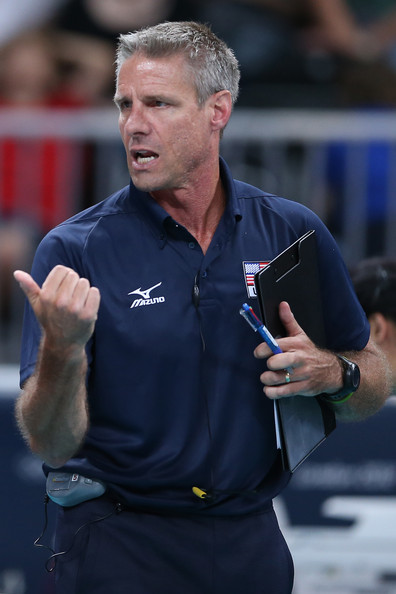
The U.S. Women’s National Team coach and volley legend in his own right, Karch Kiraly recently answered an e mail query about what the exceptional athletes in his U.S.A. gym have in common. And it’s a good jumping off point for asking if we as Coaches and Parents are really doing what is best for our athletes? 


Karch, who has been at the helm of the women’s National Team since 2013 and was an assistant the quad before, has self admittedly grown into the position and commands the respect of his athletes with his non negotiable pillar of a growth mindset. It’s not uncommon for him to approach guests in his Anaheim training facility after a practice and ask them for suggestions of what he can do better.

This idea of this unique perpetual learning space has trickled down to his team and they embrace this philosophy with both hands. In the question that prompted this post, Karch was asked NOT to mention a growth mindset because it has become synonymous with his program- from the top down. No need to mention the obvious.

“Every Women’s National Teamer is unique, each brings her own set of special skills and traits to our program - so it’s not necessarily easy or fair to generalize,” he began in his answer. This in itself telling of a coach that understands the idea of “needs based” coaching- not the one-size-fits-all so prevalent still in teaching but tailoring the training for the individual to get the best out of them while keeping the entire group engaged and moving forward.

Karch goes into his first of three characteristics he recognizes in the athletes that are exceptional enough to garner an invite into his gym.

“A common trait to be found among this special group is toughness and grit. You don’t earn your way into our gym, joining and battling the best players in the country and a number of the best in the world, without facing down some serious failures, losses and ‘crashes’ along the way. That path includes USA Select, Youth National Teams, Junior National Teams, High School, juniors, College, Professional, and our Women’s National Team itself.”

Failures, losses and crashes as a precursor to volleyball excellence? Many Olympic athletes in all sports have had hiccups in their ascent to the top of their sport. Injuries, bad coaches, lack of facilities or funding are all part of an Olympians journey. But looking back from this we have to ask…

As a parent, do you allow your athlete to go through the “failures, losses and crashes along the way” or do you deflect these from your child? Do we give them a bumper car life to keep them safe and never let them know how acrid the taste of defeat can be?

Coaches, do we allow our kids to make mistakes or just pull them from matches when they “don’t seem to have it today?” When will your ‘worst server’ get a game-like chance to get better? When do we stop looking at mistakes as the wrong numbers on a scoreboard and realize they are vital learning opportunities and the essence of learning? 


National Team players have made peace with failure. They are not necessarily happy or comfortable with it, but they understand it is part of the process. Karch’s gold medal sights were upset in the semi finals of the 2016 Rio Olympics by Serbia, 13-15th in the fifth set. The players and coaches were distraught. But they overcame their disappointment and went on to win the mentally hardest sets in the Olympic volleyball competition, the bronze medal match 3-1 v. the Netherlands.

As parents and coaches, what can we do for our teams, programs and institutions, to understand this key component to excellence? Can we stop playing the short game and understand losing is a part of sport and is not to be sequestered with blame, anger and disappointment?

“Another common trait is of course execution.” Karch says of his second characteristic. “If someone can’t execute the skills that her position demands at a consistent and elite level, or can’t learn to do so in the early years of her post-college volleyball career, it’s going to be very difficult for that person to keep earning a place within the program.”

Coaches, pull out and look at your practice plan for tonight. Are your athletes going to get game-like reps in a way that promotes the transfer and retention of those skills over the long haul, or are we just putting together a playlist of simple, one dimensional, unrealistic activities to keep the kids busy for 90 minutes? Will your training start with your 15 minute diatribe about working hard in practice to be followed up with going-through-the-motion drills that stymie their creativity and put a noose around their ability to self discover?

Coaches, this falls on us. Science tells us how to train optimally. The attention span of our athletes tells us if what we are doing is working and engaging. The improvements over weeks and months are an indicator of successful methods. Is your path one that you would be comfortable with your son or daughter taking? 


“A third common trait would be the ability to make the people around oneself better.” Karch says of a quality he shined at in his playing career. “Our former Men’s National Team coach Bill Neville would call this, ‘Elevating the play of those around you.’ Teammate-ship, communication, leadership, poise under stress and reading ability are just a few things to come to mind when contemplating the myriad of ways of elevating people around us.”

Pick a team sport and this quality is monumental; the nucleus of the team atom. In the years the U.S.A. National teams have done poorly or underachieved, a lack of leadership and/or chemistry was often the poison pill.

As Parents, how can we help raise strong leaders and communicators? It’s certainly not by hiding them from rough waters and potential shipwrecks. You hear successful teams refer to their “glue guys,” the ones that keep everyone on the same path, the ones that will grab the strays and bring them back to the herd, the ones that lead by example on and off the court and yet are still able to put the team ahead of their own interests and ego.

In this age of I, it’s harder than ever. Social media dictates that the ‘me’ is more important than the ‘we’ and our every post is critiqued by the whimsy of likes and follows. This flimsy veil of confidence cannot stand up to the tensile strength rigors of leading a team into battle. Add to this the lack of opportunities facing adversity and you have a recipe for poor or vacant leadership.

Can we change? Of course: our training, our feedback, our points of emphasis, our focuses can all be manipulated toward the kind of athletes Karch wants in his National Team gym. Is it easy? No; change never is. But these three qualities: toughness and grit, execution and the ability to make those around them better are also traits that are defined in a valued and relevant life. 


Karch Kiraly’s generous insight has given us a look at the Path to the Podium with a stopover in his National Team gym and a map of how to get there. It’s up to us to use his wisdom and insights here to better prepare our athletes for what might be their journey, the same path that we too, as coaches and parents, must be better at paving.

Monday, September 28, 2020

...As Slow as Possible....

“Patience is bitter, but its fruit is sweet.” – Aristotle

On September 5, 2020 at the St. Burchardi Church in Halberstadt, Germany, a throng of musical enthusiasts and fans of things “off the beaten path” assembled in the basement to hear a piece of music.

A tiny piece in the grand scale of time. (See and hear it here)

American composer and avante garde’ artist John Cage, toward the end of his long and distinguished life, set in motion a piece of music called “ORGAN/ASLSP” which uncoded is, “Organ As Slow As Possible.”


Cage and his cohorts used the church basement to construct an organ that is perpetually emitting music using an energy generating compressor and sand bags. On September 5, 2001, Cage’s 89th birthday, the opus began…with a 17 month pause of silence followed by the first chord which lasted another 29 months.

You see, Cage has fashioned this 8-page musical art show to last 639 years. (That is not a typo!) And so, just a few weeks ago, many of Cage’s musical fandom paid close attention as the first chord change in six years and eleven months took place among the masked and curious in the right transept of the hallowed grounds as two organ pipes were added and will play G♯3, E4 the next 17 months until the next chord change in February of 2022. 


Board chairman of Halberstadt’s John Cage Organ Foundation, Rainer Neugebauer, says the performance is composed to make us slow down the frenzy of our modern lives. “Everything does not need to happen so fast. If something needs a bit longer then it can give us an inner calm that is rare in normal life.”

Society, as we all know, has become instant. Your phone can give you directions, answers, human screen contact and most any and all modern conveniences in seconds. We get annoyed when the internet on a plane runs a bit slow even though you are travelling 600 mph at 37,000 feet above the planet. Those complexities don't enter into our mind- we want things NOW!

Sadly, coaching is trending this way as well. Coaches who have rough starts to the season are suddenly on the chopping block. Players who struggle to assimilate with new teams and new teammates are chastised for not being ready to play. And young athletes that have yet to grow into their physical potential as pre-teens are cut and run off from sports they may one day excel in because they are not good enough in this moment!

Patience has almost become an antithesis of sports performance. As a youth sports culture, we have been driven to the idea that winning is above learning, that learning must show dividends in THIS DRILL and starting your sport at 6 or 7 years old and being fixed on just one position will put the patience science says it takes to develop an elite performer, at bay.

Ask someone who has been called an overnight sensation and ask them how real that statement is? Ask someone who comes off the bench in the upcoming NBA finals and has a stellar game if this new found fame just happened?

Like a $100 bill from our pocket, we have lost our patience as fans, as parents and as coaches.

One coach was overheard last week after a practice saying, “They look better!” If we are coaching to look better at a practice, we are missing the ideas of transfer and retention. An athlete can look amazing at the end of practice on Tuesday, but what about next Tuesday? Have they retained and transferred to their game what you taught them? Have they learned?

Some athletes maybe, some others maybe not. Welcome to coaching. But if a new coach thinks change comes at an instant; they are being fooled as much as the click bait below their daily horoscope or Starbucks coupon. Learning takes patience, change takes patience. And as coaches, we need to show players that patience.

John Cage set out to give humanity something to ponder; music that will outlast all of us (probably) and our next 10 generations. On September 5, 2640, maybe one of your descendants might happen upon a small church basement in Halberstadt, Germany, if it is still standing, and marvel about what life must have been like in the olden days of 2020 as the final note sounds, finishing the work. 


Auguste Rodin once said, “Patience is also a form of action.” For Coaches today, our work is never finished. There is always more to teach, lessons to be learned, new research to explore and implement. But this all takes time and patience.

Your athletes deserve your patience just like the patience you want your children’s school and teachers to show them.

Perhaps, Maya Angelou sums it up best. “All great achievements require time.” 

Who is your next great achievement?

Friday, July 10, 2020

...Paramount to Malpractice...

In a study of coaching in Australian Football League competition in November of last year, a large swath of coach/player interactions were tracked and the following was recorded in over 1,000 interactions: Negative accounted for 20% of the feedback v. 13% positive. Controlling feedback accounted for 58% of the interactions while only 8% were autonomous, or allowing the athlete to make the decision. Finally, task related feedback accounted for 60% of the interactions while process related information was just 37%.

What does this tell us? First, that traditional uses of feedback were evident in these professional and elite competitive sports settings. Negative, coach controlled and movement specific dominated the coaching scenery. However, the study also gives these findings: More positive feedback was provided in winning quarters than in losing quarters and more controlling feedback was prevalent in losing quarters than in winning ones.

Wait…what?

Another study done in 2011 had 40 novice and 40 experienced basketball players shooting free throws. In the study, “Both groups responded faster to neutral and positive words than negative words.” It concluded by reporting, “It was concluded that directing attention towards positive emotion may have benefited sports performance by diverting attention away from execution of the primary task (shooting free throws), promoting automatic skill execution by experienced basketballers.” 


Hmmm….

Let’s step back from the court and the pitch for a second. A 2020 study of the effects of teachers’ praise to reprimand ratios on elementary school students concluded the following: “A positive linear relationship was evident, showing that the higher the teachers praise-to-reprimand, the higher the students on-task behavior percentage.” In other words, the more praise students got, the more improvement they showed.

Let’s flip the script.

In some therapies in working with addiction treatment, often times confrontation therapy has been used and touted as a successful pathway to overcoming these toxic habits. But a 2009 study put that idea back in the drawer with leeches and bloodletting. “It is time to accept that the harsh confrontational practices of the past are generally ineffective, potentially harmful, and professionally inappropriate.”

And yet in so many sports, so many teams, coaches continue to berate, embarrass, ridicule and demean their athletes as an idea of motivation and “getting the best out of them.” Some coaches think certain athletes respond better to this kind of treatment. And even some parents, who maybe experienced this kind of coaching feel it did a world of good for them and thus, needs to be inflicted upon their child.

Take this kind of behavior and put it anywhere EXCEPT the sports arena. Your 10-year-old 4th grader misses a math problem and is forced to do pushups and gets a verbal tirade about how she isn’t trying and isn’t as good as the rest of the class. Your 13-year-old son is chastised by the waitress for spilling his soft drink on the restaurant table and is labeled a public klutz and not physically gifted enough to be brought out into public to eat. Your 16-year-old is going for her driver’s license and makes a small mistake on a left-hand turn in traffic. The instructor tells her to pull over, turn off the engine, get out of the car and proceeds to chide her in a loud voice just how ill equipped she is for driving and how her inattention to detail is going to cost someone their life someday.

Mom? Dad? You okay with these examples? 


Then why is sport different? Coaches, the evidence is OVERWHELMING. Negativity, yelling and screaming, detrimental language and actions- they are game changers but in the wrong direction.

Some coaches are open to change. Some aren’t. That’s the paradox of every profession in the world. Sometimes a profession doesn’t require much change and in some, technology and science has driven a new path forward. And as these professionals’ option, they can take the new path or stay on the dirt road. It is their decision or in come cases, the decision of their superiors or even the public at large. How many coaches have lost their careers because a cell phone records a post game meltdown or a regrettable phrase falling on the ears of bystanders. 


Not only is it just wrong and outdated, it can be a career killer!

As a parent, understand this generation IS different than yours. While you might not have had any options in your youth sport career because of opportunities or proximity to things, this generation has a plethora to choose from. Be selective when choosing a coach and a program. Negativity breeds negativity- understand that.No one can sustain their best being in fear all the time. Positive feedback, positive interactions, enhanced expectancies are all part of bringing the best out of athletes.

As coaches, we have to change. We have to realize that communication- the language we use and how we give it is the core to athlete development. Losing our cool, chirping the same things we did 5 or 10 years ago is paramount to malpractice. Take some time to be intentional with your thoughts and what you are saying to your athletes.

The science is telling us so.

Monday, July 6, 2020

...Thief of Joy...

A few seasons back, an innocuous chat with a Parent about their 14 year olds hair color, fashion sense and current interests and hobbies, all that was at the time considered perhaps a bit “out of the mainstream” was concluded with the Parent saying, “We’re proud that she’s finding herself and she’s her own person!”

A few minutes later, in the same discussion with the same parent, she expressed concern that her daughter “…wasn’t hitting the ball like Sarah. What’s wrong with her?”

We are comfortable when our children “go their own way” during social and educational situations, sometimes even proud. Some kids are put into AP classes while for others it might be necessary to take some remedial courses to shore up skills. Some students are held back a grade for emotional and education reasons. This isn’t frowned upon, it’s part of figuring out what is best for your child, helping them become a well adjusted and contributing member of society; something most every Parent subscribes to.

But when we throw athletics into the arena, those sentiments vanish quickly. Why isn’t my child as fast as hers? Why can’t my Son run like his? Why isn’t her jump shot consistent like her teammates?

The answer is the same one for every other aspect of their lives. Kids are different! They grow, mature and learn and process at different speeds and their engagement levels vary wildly.

A prime thought comes from T.J. Buchanan, the Director of Sport Development for USA Lacrosse and his ideas which are succinct and may cause some Parental arrhythmia. “There is no such thing as an elite 8-year-old lacrosse player. There are no high-performance 10-year-old lacrosse players. Some coaches may tell you different. Parents may tell you different. But what they are commonly mistaking for ‘elite’ or ‘high-performance’ is really just a young athlete who is simply more physically gifted at that given point in time, compared to their peers.” 


Some Coaches may also see their athletes at all the same level and muse, “I taught this to everyone but Jenny was the only one that didn’t get it!” Our first assumption is that either Jenny wasn’t listening, doesn’t like us as a coach or just doesn’t care when in fact, probably none of those are true.

Those 11’s and 12’s coaches see this learning variance more than 16’s and 18’s coaches, but it’s prevalent throughout sports- little league to the Majors. While it might be those kids haven’t gotten to the point of learning a skill or more importantly being able to execute that skill, a couple of other factors could be weighing in as well.

Perhaps the coach’s teaching technique leaves a lot to be desired. Volleyball is a game of speed, power, movement and most of all decision making. If your coach incorporates none of these into a practice plan, chances are those athletes will be behind other athletes of the same age.

Sometimes a child is asked to play ‘up’ on a higher age team because of their size or abilities. But just because they are playing on an older team, they are still thousands of volleyball touches behind. They are thousands of opportunities to read the ball coming over the net behind. They are still thousands of plays, on the other side of the net, behind where they would be learning and moving and anticipating. These thousands of touches aren’t ‘made up’ in a season, that player will have to learn faster in less touches, opportunities and plays. That alone can be overwhelming and a burden on athletes we are trying to train into relaxing and finding their ‘zones’ at the higher levels of our sport.

This need to compare is built into our social fabric daily. Social media has us chasing the famous and fit, comparing ourselves to their looks and lifestyles. We compare our lot in life with others of similar economic status and wonder why we can’t afford what our neighbors have. We compare our kids to their kids, our jobs to their jobs, our teams to their teams, etc. It’s built into our minds and on the positive end, it can help inspire us to do things maybe we didn’t think possible before. On the negative end, it can cause depression and a toxic self worth. 


Most child psychologists agree that it’s less than ideal and can be downright harmful for Parents to compare their own children but again, athletics makes these comparisons seem routine. “Your sister was able to serve over the net at 11 years old, why can’t you?”

Parents may be a root cause of this comparison conundrum. Yale Psychologist Marc Brackett, the director of the Yale Center for Emotional Intelligence (EI) and the author of “Permission to Feel” researched college students on their EI and found in his data that college students reported feeling “stressed and anxious” as well as tired, bored and lonely. But when he unpacked the underlying emotions, one stood above all and was the root cause of the others: Envy. Envy of other students, grades and social status.

So how as Parents and Coaches can we get out of this compare and contrast mindset? National Team player Madi Kingdon, in an interview on the wonderful new podcast, “I Think We’re Good Here” had this to say about comparing herself to others.

“For me, I’m training with the best people in the world. If I start comparing myself to the person on my left or my right, I think that’s a recipe for disaster.” Kingdon says. “When I first got to the (USA) gym, I was like okay, that’s Jordan Larson…she’s pretty good, ya know? It’s like a snowball. So I think over time, it’s gotten to a point where I’m competing against myself.” 


“If I’m not making a roster, okay, look at the other outside hitters that are in front of me on this roster- they’re phenomenal. I mean, stats don’t lie- they have good stats, mine could be better and I’m fully aware of that and just realizing I have so much room to grow.” Madi adds, “People ask me ‘do you want to play volleyball anymore’ and I’m like yea, I have so much room to get better! I have so much work I want to do and I’m not near the player I want to be. So I realize that there’s room for potential and it’s more competing against myself than competing against other people who are in the gym because I think that would probably make you go crazy. It’s not easy!”

The phrase is overused a lot but in this instance, not used enough: Be the best version of yourself. That’s all that can be asked of you.

As an athlete, don’t worry about Coaches and Parents comparing you to other athletes; it’s ill conceived and a distraction.

As a Coach, instead of comparing, start coaching better. Understand that every athlete on your team has strengths and weaknesses and finding those strengths for the betterment of both player and team is a full time job in itself. There is no time to compare.

And Parents, let’s stop limiting your athlete’s growth and potential by corralling them into your ill fitting idea of what they should be and who you have compared them to and celebrate who they are, what they bring to the team and how they can best challenge themselves to improve.

Theodore Roosevelt’s wisdom and pith come across in his fitting mic drop;

“Comparison is the thief of joy.”

Friday, June 5, 2020

Where are we?

“Sports do not build character. They reveal it.” – Heywood Broun.

If sports are revealing character, we might be in trouble.

The Houston Astros spent their 2017 World Series Championship season cheating. They stole pitching signs and got the information to their hitters which gave them a distinct advantage over teams ‘playing by the rules.’ But they won. Their end justified their means. “If you ain’t cheating, you ain’t trying.” Is a quote credited to many coaches and athletes, but in this case, and many others like it, is winning the only thing that matters? 


Lance Armstrong. Deflate-gate. The 1919 Black Sox scandal. Triple Crown winning thoroughbred Justify. Steroid use in baseball, football, basketball. Olympic doping across the spectrum of sports. College athletics rife with recruiting violations. Judges and officials bought off and bribed. Point shaving, sexual abuse by coaches and staff, emotional abuse by same. Daily…DAILY, sports pages are littered with those that chose the crooked road for the glory and probably, the profit, of the win.

New York Times author David Waldstein wrote about the rampant cheating going on in the chess world recently.

“In chess, players at live tournaments are now required to leave their phones behind and pass through metal detectors before entering the playing area. Some have even been asked to remove clothing and been searched. And some tournaments now put players behind one-way mirrors to limit visual communication.”

Chess?

Just a few weeks ago, Formula E driver Daniel Abt was fired from his racing team for having a “ringer” drive for him in a video game contest.

A VIDEO GAME???

Where are we?

The first thing to come to grips with is that while most professional and college sports may be woven into our daily lives, it is entertainment. During this lockdown, no one has died because the NBA or the NHL have suspended their seasons. No one is suffering except those that make money off of these enterprises including, of course, the athletes themselves.

The Olympics have been delayed a year but most of the athletes now are professionals and can make money at other events and tournaments. The days of amateurism in sports are in the rear view mirror.

Even the worldwide leader in sports, ESPN, has resorted to pre-packaged documentaries on Michael Jordan and Lance Armstrong to go along with Korean baseball, axe throwing, stone skipping and sign spinning to keep the lights on.

But there is something lost in all of this.

Somewhere in Houston, there are young little leaguers who look up to their beloved Astros. Maybe they don’t understand the idea that their heroes cheated to win.

Or sadly, maybe they do.

Where are we?

At youth soccer games, line ups are checked against birth certificates to ensure no one is older than they are supposed to be. Even in our Arizona Region tournaments, teams are required to turn in birth certificates which are matched against rosters which are presented at the beginning of each tournament to ensure everyone is playing by the rules. 


Parents will hold their kids back a year in middle school to give them a year advantage in growth and strength when playing their sport in high school. Some parents will lie about their residence so their child can go to a different school with a better sports program. Some still are given "incentives" to come to a private or charter school as super teams are built to roll over their public school competition. 

The Arizona Interscholastic Association, the NCAA, the NAIA- they face daily complaints about teams bending the rules, circumventing policy and violating standards, all for the chance to hold the golden trophy.

We are now required to think the least of people because the will to win is so glacial.

We hand out sportsmanship awards and call people out for their integrity because, sadly, there is so little to go around. My grandson recently got an award from his principal because he owned up to talking in class when another boy was blamed. While we were all very proud of him, the question arose; shouldn’t this just be the normal?

We have lost the honor of competing in sports. Out of one side or our mouths, we talk about how much we can learn from adversity and how losing teaches us so much and out the other side, we blame everyone when we lose, accusing the other team of cheating or the officials for being biased. We make every game or match the end all, life or death moment. We give up on our teams that don’t perform the way we need them to for the quick social media prompts of our city's Professional supremacy! An NBA team that starts 1-7 is likely a disaster requiring a coaching change, a trade, a new owner; some kind of reboot. It’s unacceptable.

Maybe the first thing we need to tell our younger athletes is the truth; college, professional and yes, even a lot of high school sports are driven by $$! It’s not so much about integrity and doing and being your best, it’s about results. Even in youth sports, without the prize money at the end of the tournament, we are as a nation transfixed by the result. Parents, coaches and now, even the kids are conditioned to ask, “Where did we finish?” “What place did we come in?” “Did we do better than…?”

Where are we?

Coaches, this is a call to action. When you listen to the top coaches in any sport, much of their conversation is about character and culture. Is yours about winning first? Can we get back to developing wonderful human beings who can use youth sports as a vehicle toward growth, independence, integrity, self esteem, teamwork, empathy, honor and class? 


And by the way, aren't these the qualities that help WIN in the long run anyway?

Parents, this is a call to action. What are you emphasizing in your son or daughter’s athletic career? Is it the work and preparation they are putting in to give themselves the best chance to succeed? Is it the effort they put in on the court or field AND the effort they put in off it, to be the best teammate and coachable athlete they can be? Or is the first thing we ask, “Did you win?”

Pick a profession and chances are very high there are cheaters in that profession. Not just sports, in all areas of life. Our young men and women will learn this in time; usually the hard way. They will be tricked or scammed or worse yet, let down by someone they looked up to as a mentor or role model. As coaches and parents, we should be helping them to understand it doesn’t have to be this way.

There are so many remarkable coaches, parents, club directors, youth sports officials, professional athletes, collegiate athletes and people associated with sports that can help us as a divining rod toward integrity and morals. But when they fall from grace, it’s just as important to have those conversations about why.

It’s very unlikely this diatribe will cause many of us to think differently or act accordingly but let’s leave it with this thought.

If you are coaching your son or daughter, would you be okay with them seeing you cheat? If you owned the Houston Astros and your 12 year old son saw the news that the coach and players you hired cheated to win, and tarnished one of the best moments of his young life, what do you now tell him? If you came home and your wife asked you why you were home early, could you look her in the eye and tell her you were caught cheating, giving one team an advantage over another as an official for an envelope of cash?


The Houston Astros, despite admitting to cheating, firing many that were responsible and apologizing way after the fact, are STILL the 2017 World Series Champions. For them, their end sadly justified their means. How refreshing would it have been if the owner of the Astros had given the trophy, the money and the designation as champions BACK to Major League Baseball and said we don’t deserve this, we acted in a manner that is not representative of the behavior we aspire to be as professional baseball players?

We can help take youth sports back or we can recede into the sediment of complacency, deniability and deflection. We can make youth sports a vehicle to once again reveal character when we see it shining, or extinguish that flame before it has a chance to light our way and warm our hearts.

The question is, where are we?

Monday, May 18, 2020

The Samurai, the Gamer and the Birthday Boy

You can blame David Letterman perhaps. His Top Ten lists were a staple of his quirky comedy and lead to books, videos and oft imitated staples of our society. While some can be inane and self promoting, some can be useful in our lifelong endeavor to be better at our craft. 

To that end, please partake in these three distinctive lists drawn from three random sources, all offering up nuggets of wisdom for coaches winding their way through the path. 


Musashi 

A mere 660 miles southeast from the site of the (now) 2021 summer Olympics is a small deserted island that is only accessible by boat. It’s called Ganryujima and it is home to one of the most famous statues in the history of Japanese sword art, also more commonly referred to by its age of the culture, the Samurai. 


The master was Miyamoto Musashi, (1584-1645). In this statue, he is battling his final duel, which he wins when he brings his wooden sword made from the oar of a boat down upon his foe just seconds before he was to be slashed. 

Musashi finished his life with a perfect 61-0 record in duels and is widely considered the greatest Samurai of all time. At the end of his life, he wrote a book called the Five Rings where he diligently records his 21 Rules of Life. 

In his disciplined world of life and death struggles, Musashi would never fall in love, never eat good food and never have possessions that weren’t useful. But some of these rules resonate with the ideas that we as coaches both need and should help disseminate toward our athletes. 

1. Accept everything just the way it is. 

3. Do not, under any circumstances, depend on a partial feeling. 

4. Think lightly of yourself and deeply of the world. 

6. Do not regret what you have done. 

7. Never be jealous. 

9. Resentment and complaint are appropriate neither for oneself or others. 

21. Never stray from the way. 

While we are not in literal life and death struggles as we face off across the net from another team, Musashi’s rules do remind us that some principles are forever and can help us through our own days of obstacles and help guide our athletes through their life as well.


Gamers 

Watch a player throw themselves into the stands for a loose ball and they are described as “gamers.” But in the 1970’s and 80’s this moniker hbegan to hold a different meaning. Pong turned into Galaga which morphed into the Brother's Mario into the next generation of home entertainment. 

James Paul Gee is considered the Godfather of “Game based learning.” In other words, he sees video games as great learning and teaching methods and recently came out with a list of the 16 principles of good game based learning. While this list has an obvious bias toward video games, some of his principles could be plucked from Coaching handbooks and webinars quite easily. 

1. Players build a sense of identity throughout the video game, either through direct input or an on-screen character they inherit. 

2. Communication occurs between the player and the game.

4. Failing in a game holds few consequences in comparison to real life, empowering players to take risks. 

6. Players have control over the gaming environment. 

7. The gaming environment contains problems that naturally lead into one another, allowing a player's mastery to grow and evolve. 

8. Games offer a problem that challenges students assumed expertise. 

9. Players receive information as they need it, not before, which teaches them patience and perseverance and improves critical thinking abilities. 

11. The game should frustrate the student enough to challenge them but be easy enough that they believe and can overcome the problems faced. 

13. Games force players to expand their situational knowledge and consider courses of action other than linear ones. 

15. In multi player environments, players have different skills, forcing them to rely on each other- a needed soft skill for students. 

16. Competency occurs through taking action in the game, reversing the typical model in which students are required to learn before being allowed to act. 


According to the Entertainment Software Association, 3 out of 4 households have a gamer under their roof and 65% of American adults play video games. While the numbers for Youth Sports continue to disappoint, this faction of society is blooming. Perhaps Gee’s list can help us understand how to better coach this generation and help kids blend the on court with the online. 


A 68th Birthday 

Kevin Kelley turned 68 last month. The founding executive editor of Wired magazine who adds author, photographer, conservationist and other wide ranging interests to his resume’, jotted down his 68 Bits of Unsolicited Advice as a birthday present to all of us. 


As you will see, much of his advice would be considered chapter and verse for coaching our chosen sport. 

· Learn how to learn from those you disagree with, or even offend you. See if you can find the truth in what they believe.

· Being enthusiastic is worth 25 IQ points. 

· Being able to listen well is a superpower. While listening to someone you love keep asking them “is there more?” until there is no more. 

· Gratitude will unlock all other virtues and is something you can get better at. 

· Pros are just amateurs who know how to gracefully recover from their mistakes. 

· Don’t be the smartest person in the room. Hangout with, and learn from, people smarter than yourself. Even better, find smart people who will disagree with you. 

· The purpose of a habit is to remove that action from self negotiation. You no longer expend energy deciding whether to do it. You just do it. Good habits can range from telling the truth to flossing. 

· Promptness is a sign of respect. 

· The more you are interested in others, the more interesting they find you. To be interesting be interested. 

· To make mistakes is human. To own your mistakes is divine. Nothing elevates a person higher than quickly admitting and taking personal responsibility for the mistakes you make and then fixing them fairly. If you mess up, fess up. It’s astounding how powerful this ownership is. 

· You can obsess about serving your customers/audience/clients or you can obsess about beating the competition. Both work, but of the two, obsessing about your customers will take you further. 

· Separate the processes of creation from improving. You can’t write and edit, or sculpt and polish, or make and analyze at the same time. If you do, the editor stops the creator. While you invent, don’t select. While you sketch, don’t inspect. While you write the first draft, don’t reflect. At the start, the creator mind must be unleashed from judgment.

· If you are not falling down occasionally, you are just coasting. 

· There is no limit on better. Talent is distributed unfairly, but there is no limit on how much we can improve with what we start with. 

· When crisis and disaster strike, don’t waste them. No problem, no progress. 

· Acquiring things will rarely bring you deep satisfaction. But acquiring experiences will. 

· How to apologize: Quickly, specifically, sincerely. 

As with any venture in life, there are clues and ideas that surround us, now more than ever. Sometimes they aren’t in places we would expect and we have to secure the miners helmet to find nuggets of wisdom, but they are out there. 

If you have some you would like to share, please e mail us at outreach@azregionvolleyball.